
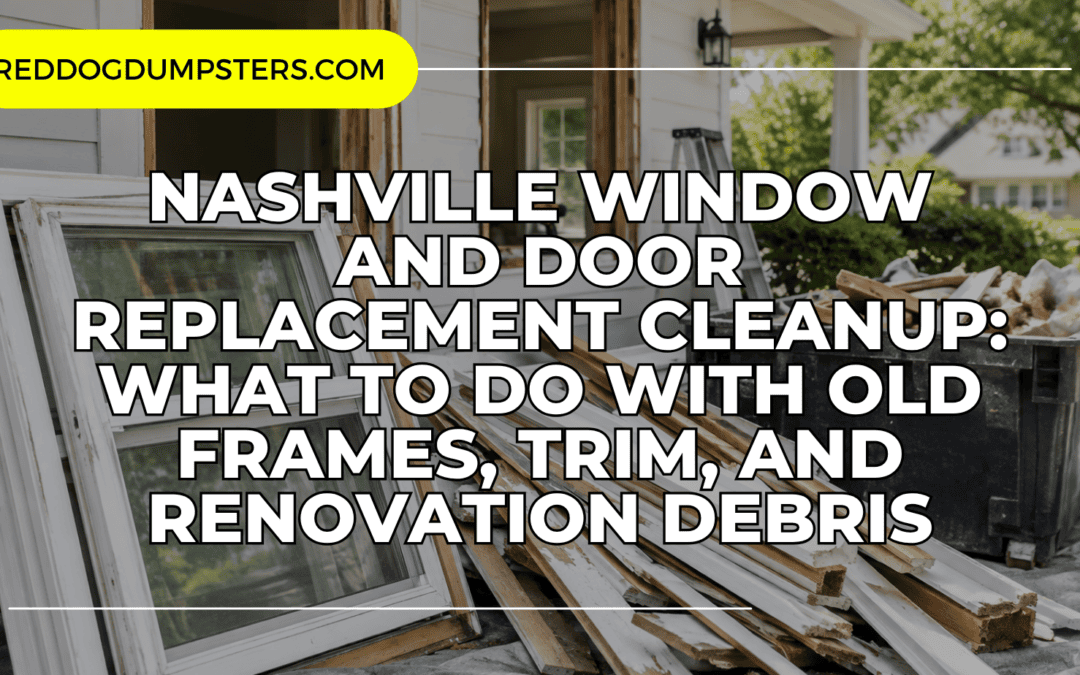
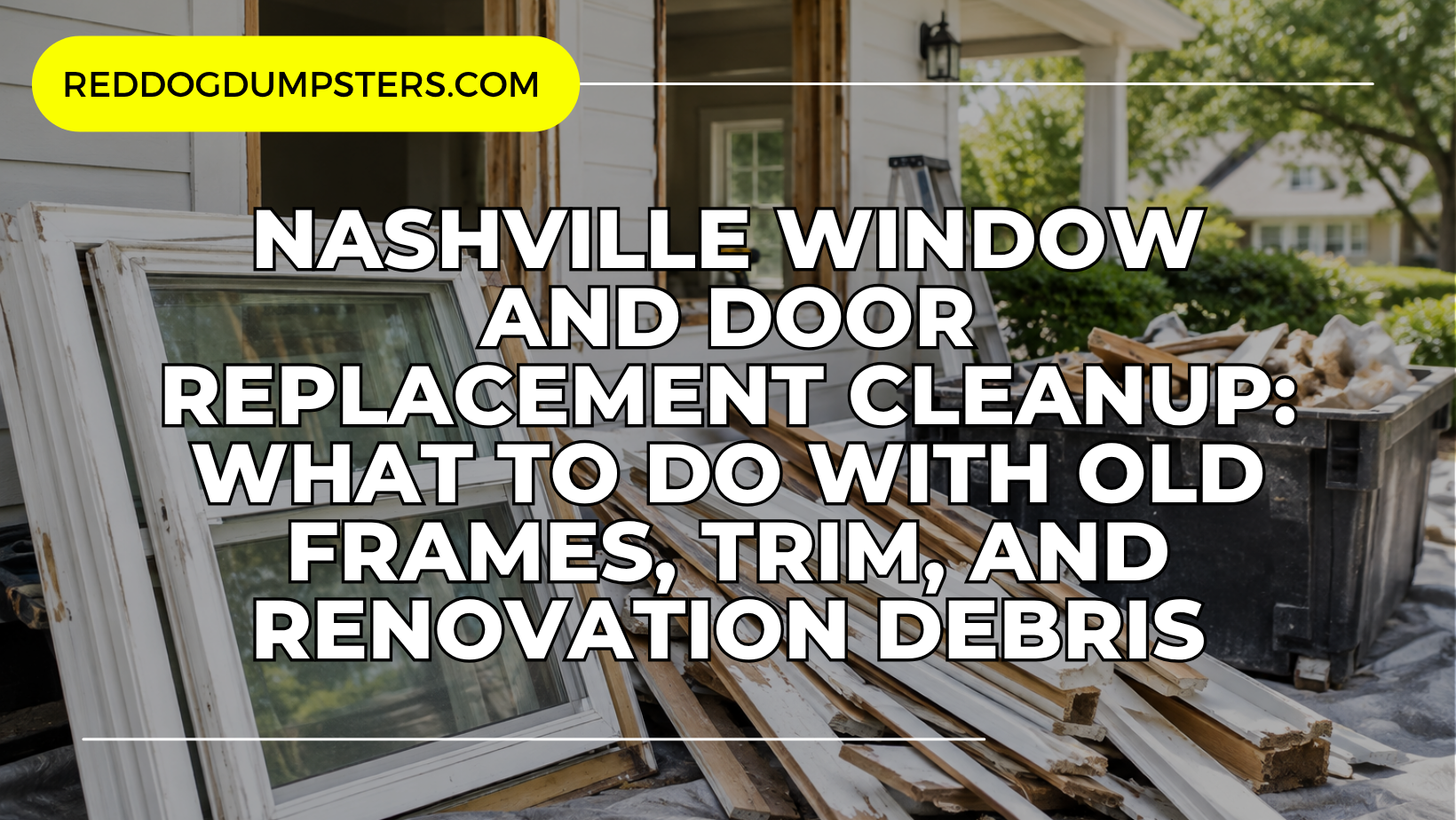
Replacing old windows and doors can make a home more comfortable, improve its appearance, and address issues such as drafts or damaged frames before winter. But once the installation begins, homeowners often discover that the project creates more waste than expected. Old frames, trim, hardware, cardboard packaging, protective wrapping, and other renovation debris can quickly accumulate around the property.
For homeowners in Nashville, planning window replacement cleanup before work begins can make the entire project easier to manage. Without a clear disposal plan, discarded materials may pile up in the driveway, crowd the garage, or interfere with contractors trying to finish the installation.
Whether you’re replacing a few windows, upgrading exterior doors, or renovating several rooms, knowing how to handle the debris can help keep your project organized from start to finish.
At Red Dog Dumpsters, we help homeowners manage renovation waste with convenient dumpster rental options. Here’s how to plan for window frame disposal in Nashville, handle old doors and trim, and determine when a home renovation dumpster makes sense for your project.
Why Homeowners Replace Windows and Doors Before Winter
Late fall can be a practical time to finish planned home improvement projects before colder weather settles in. Windows and exterior doors are important parts of a home’s building envelope, and damaged or poorly fitting units may contribute to drafts, moisture concerns, or reduced comfort.
Although installation timing depends on the contractor, weather, and product availability, preparing for the work in advance can help homeowners avoid unnecessary delays.
Address Drafts and Worn Components
Older windows and doors may have damaged seals, deteriorating frames, or hardware that no longer works properly. Depending on the condition of the existing units, replacement may be more practical than continued repairs.
When installers remove the old materials, the project can produce bulky frames, glass, trim, fasteners, and packaging. Even a small replacement job may leave enough debris to create a cleanup challenge.
Before installation day, ask your contractor which materials will be removed and whether hauling is included in the project estimate.
Improve the Home’s Appearance
Replacing outdated windows or exterior doors can refresh a home’s appearance and complement other improvements, such as new siding, exterior paint, or updated trim.
These projects may involve removing old decorative pieces, damaged wood, interior casing, and exterior finishing materials. If you’re coordinating several upgrades at once, the debris from each part of the project can add up quickly.
Planning waste removal ahead of time helps prevent discarded materials from getting in the way of the installation crew.
Complete Planned Improvements Before the Holiday Season
Homeowners often want renovation work finished before holiday gatherings and the end of the year. Replacing windows and doors can be one part of a broader home improvement plan.
A realistic schedule should account for installation, cleanup, and disposal. By arranging the waste removal before work begins, you can reduce the chance of having old materials sitting around after the contractors have finished.
What Debris Is Created During Window and Door Replacement?
The materials generated by a replacement project depend on the type of windows or doors being installed and how much of the surrounding structure needs to be removed.
Understanding the likely debris makes it easier to decide what can be reused, recycled, or placed in a dumpster.
Old Window and Door Frames
Frames may be made from wood, vinyl, aluminum, fiberglass, or a combination of materials. Some can be bulky and awkward to carry, especially when several windows or doors are replaced at once.
Inspect the removed frames before deciding how to handle them. Certain materials may be suitable for recycling or reuse, depending on their condition and the options available locally.
If the frames are damaged or unsuitable for reuse, confirm whether your dumpster provider accepts them. Mixed-material frames may have different requirements from ordinary lumber or general renovation debris.
Glass Panels and Window Components
Old windows can leave behind glass panes, broken pieces, seals, and other components. Glass requires special care because broken edges can cause serious cuts during handling and transport.
Do not leave loose glass in walkways or mix broken pieces into an ordinary debris pile where someone could be injured. Ask your installer how the glass will be handled and whether the disposal provider accepts it.
Never assume that glass is acceptable in a rental dumpster simply because the rest of the window frame can be discarded. Confirm the requirements before loading any glass components.
Interior and Exterior Trim
Window and door replacement may involve removing interior casing, exterior trim, molding, or damaged sections of wood around the opening.
These materials are often easier to collect than full frames, but long pieces can still take up considerable space. Nails, screws, and other fasteners may also remain attached.
Keep trim and other sharp materials organized, and have contractors remove or secure exposed fasteners where appropriate. If the trim is in good condition and you are planning to reuse it, store it separately from the waste.
Packaging and Installation Debris
New windows and doors often arrive with cardboard, plastic wrapping, foam protection, corner guards, and other packaging materials.
Installation can also generate small amounts of lumber, shims, fasteners, and other project debris. When several units are installed, the packaging alone may create a noticeable pile.
Separate clean cardboard and other recyclable packaging when practical. For materials that cannot be recycled or reused, confirm which items can go into your selected dumpster.
Handling Old Frames, Glass, Trim, and Packaging
Once you know what the project will generate, create a plan for handling each material. This helps keep the worksite safer and prevents recyclable or reusable items from being mixed unnecessarily with general waste.
Sort Materials Before Disposal
Set aside separate areas for reusable materials, recyclable packaging, and debris that needs disposal. This can be as simple as designating a section of the garage for items being kept and a separate collection point for approved waste.
Ask your contractor to identify materials that require special handling, especially glass and components that may contain hazardous substances in older building materials.
Avoid assuming that all materials from a single window or door can be disposed of together. Their composition and condition may affect the available options.
Consider Reuse and Recycling
Some old frames, hardware, and trim may still have value if they are in good condition. Depending on the material, you may be able to reuse components elsewhere or offer suitable items to a salvage business or another interested party.
Clean cardboard packaging may also be recyclable through an appropriate local program. Check local acceptance rules, since recycling options can vary by material and provider.
For items that cannot reasonably be reused or recycled, arrange an appropriate disposal method before the installation crew begins removing them.
Confirm What Your Dumpster Can Accept
A dumpster can be a convenient way to manage many types of renovation debris, but acceptance rules vary. Glass, certain fixtures, hazardous materials, and unusually heavy loads may require separate arrangements.
Red Dog Dumpsters provides dumpster rental for home remodeling projects in Nashville. Before booking, share the details of your window or door replacement project and confirm which materials can be loaded.
This step is especially important if your project combines window replacement with siding removal, structural repairs, or other renovations that produce different types of debris.
Keeping the Work Area Organized During Installation
A clear work area helps contractors move materials safely and reduces the time spent working around discarded items. This is especially important when several windows or doors are being replaced in different parts of the home.
Establish a Dedicated Debris Collection Area
Choose a location where contractors can place approved waste without blocking entrances, hallways, or access to other work areas.
If the project is taking place throughout the home, coordinate where removed materials will be collected and how they will be moved outside. Keep pathways clear so workers are not carrying bulky frames around piles of packaging or discarded trim.
Avoid placing sharp glass or unstable materials in a shared collection area where family members, children, or pets could encounter them.
Coordinate Cleanup With Your Installer
Before work begins, ask your contractor who is responsible for removing old frames, handling glass, collecting packaging, and hauling away debris.
Some installation companies include cleanup and disposal in their estimates. Others may leave certain materials on-site or charge separately for hauling.
Understanding these responsibilities helps you decide whether you need a dumpster and prevents duplicate arrangements or unexpected cleanup work after installation.
Remove Debris as the Project Progresses
If several windows or doors are being replaced, avoid letting waste accumulate until the entire project is complete. Collecting approved debris as each area is finished can help keep the worksite manageable.
Make sure materials are handled safely and that contractors have sufficient space to work. Do not move heavy frames or broken glass without the appropriate equipment and protective measures.
If a dumpster is available on-site, confirm the accepted materials and loading instructions with your provider before using it.
Planning Dumpster Placement Before Delivery
Arranging a dumpster involves more than choosing a container. You also need to consider where it will sit, how the delivery vehicle will access your property, and whether the location will interfere with the renovation.
Choose a Suitable Location
For many residential projects, the driveway is a convenient place to position a dumpster. It may provide easy access for loading while keeping debris out of the home’s interior.
However, the best location depends on driveway dimensions, surface condition, slope, overhead obstructions, and available access. Discuss placement with your rental provider if the driveway is narrow, steep, or otherwise difficult to access.
Although providers take care during delivery and placement, the container and delivery equipment can still pose a risk to certain surfaces. Consider the condition of the driveway and discuss any concerns before delivery.
Keep Entrances and Work Areas Accessible
A dumpster should not block the doors, windows, or pathways contractors need to access during installation. Make sure there is enough room for the delivery truck and that the container will not interfere with garage access, pedestrian routes, or neighboring properties.
If your home is part of a homeowners association or located in a community with specific parking rules, check whether any restrictions apply to temporary dumpster placement.
Street placement may require permission or a permit, depending on the location. Confirm local requirements before arranging delivery.
Schedule Delivery Around the Installation
Ideally, the dumpster should arrive when the project is ready to generate debris. Scheduling too early can occupy valuable driveway space, while scheduling too late may leave contractors without a convenient collection point.
Discuss the expected installation dates with your contractor and allow some flexibility for weather or scheduling changes.
Red Dog Dumpsters offers residential dumpster rental in Nashville with rental options for home cleanup and renovation projects. You can review available options on our Nashville residential dumpster rental page.
When a Home Renovation Dumpster Is Worth It
For a single window replacement, the installer may be able to handle all the waste as part of the job. But when several windows or doors are being replaced, or the work is part of a larger renovation, a dedicated dumpster can make cleanup more manageable.
Multiple Windows or Doors Are Being Replaced
Replacing several units can generate a substantial amount of packaging, frames, trim, and other debris. The materials may be too bulky for ordinary household waste collection, particularly when the work is completed over a short period.
A home renovation dumpster provides a central location for approved project waste, reducing the need to move materials repeatedly around the property.
Before renting, estimate the number of units being replaced and list the materials expected from the installation. This will help your provider recommend an appropriate container.
Window Replacement Is Part of a Larger Renovation
Homeowners may combine window or door replacement with siding upgrades, exterior trim repairs, interior remodeling, or other improvements. When multiple projects happen at once, debris can accumulate faster than expected.
A dumpster can help manage the combined waste, provided the materials are accepted and the load stays within applicable limits.
Red Dog Dumpsters offers remodeling dumpster rental in Nashville for a range of home improvement projects. Contact the team to discuss your plans and confirm whether your project’s materials are suitable.
You Want to Avoid Repeated Disposal Trips
Without a disposal plan, homeowners may end up making several trips to drop-off facilities or trying to fit bulky renovation debris into routine collection services.
A rental dumpster can simplify the process by keeping approved waste in one place until pickup. This can be particularly useful when contractors are working on a tight schedule or the renovation involves multiple areas of the home.
The right solution depends on the amount of debris, the materials involved, and the disposal options available. Confirm the rental period, container capacity, weight allowance, and accepted materials before booking.
Keep Your Nashville Window or Door Replacement Project Organized
Replacing windows and doors can be a worthwhile home improvement project, especially when you’re addressing worn components or preparing your property for colder weather. But the work does not end when the new units are installed. Old frames, trim, glass, and packaging still need to be handled properly.
Planning the cleanup in advance helps you keep work areas accessible, separate reusable materials, and arrange suitable disposal for the remaining debris. It also gives you a clearer picture of whether your contractor’s cleanup service will be enough or whether a separate dumpster rental makes sense.
If your project involves multiple windows, exterior doors, or additional renovation work, Red Dog Dumpsters can help you plan for the waste removal side of the job.
Keep your window or door replacement project organized with a convenient dumpster rental from Red Dog Dumpsters. Visit our Nashville residential dumpster rental page or remodeling dumpster rental page to explore your options.
Before booking, confirm that your specific materials, including glass and any specialized components, are accepted and review the applicable weight limits. With the right plan in place, you can finish your renovation cleanup and enjoy your updated home without unnecessary debris getting in the way.